Background
Impetus
Over the past few years, in partnership with various teams in HQ, SDIC has launched a series of projects to advance Samsung products' ability to include ever more diverse set of people. With the latest project, our goal was to develop a strategic PoV on how to design for neurodiversity and how Samsung should proceed.
Qualitative Research
Secondary Research
Landscape Scan
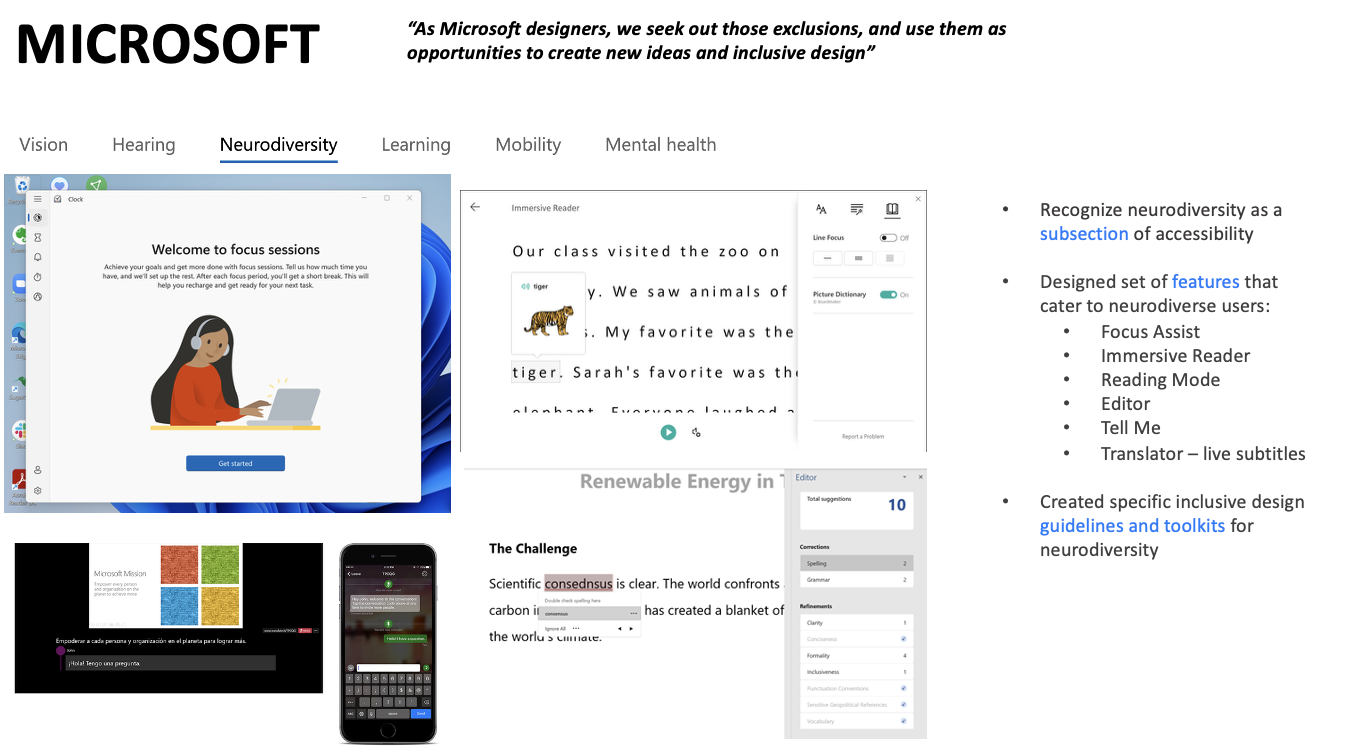
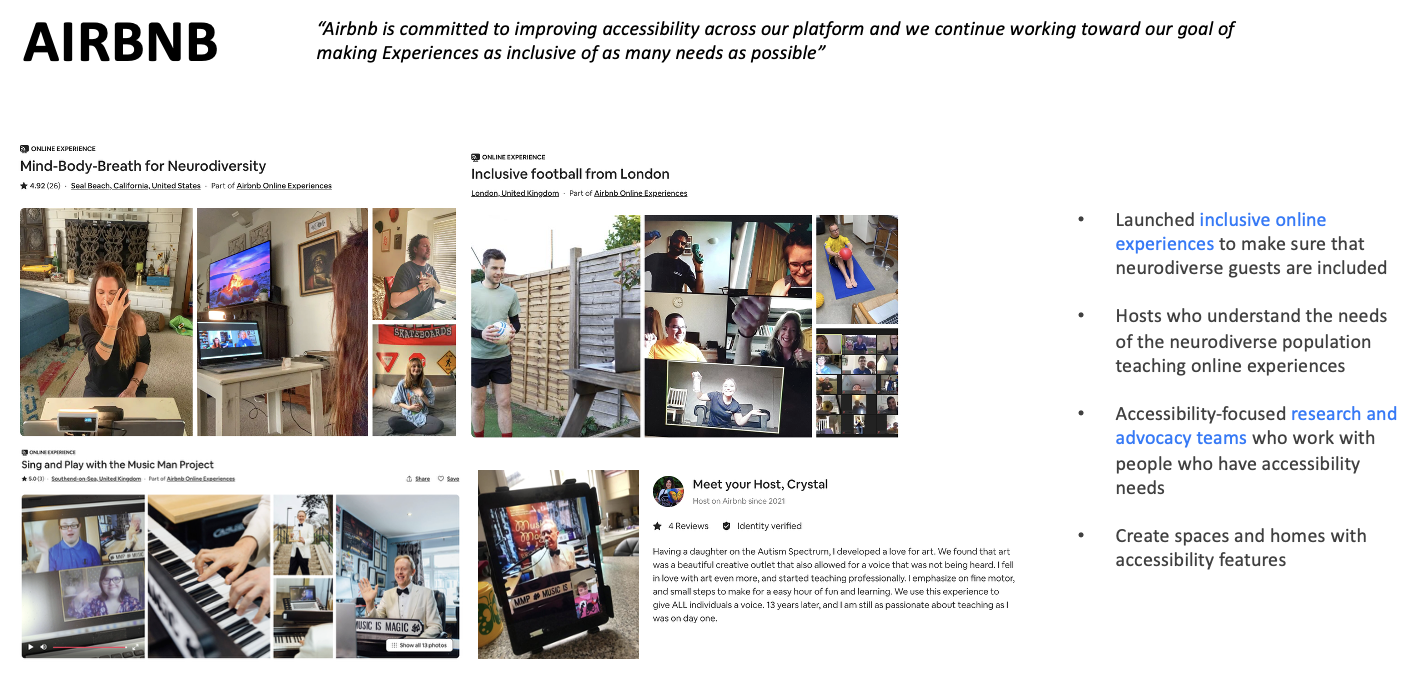
We started by analyzing how major tech players like Google, Microsoft, and Apple were addressing neurodiversity across their ecosystems. This included market research evaluating learning and training, toolkits, experiences and programs, accessibility features, and sensory customization in their technology products.
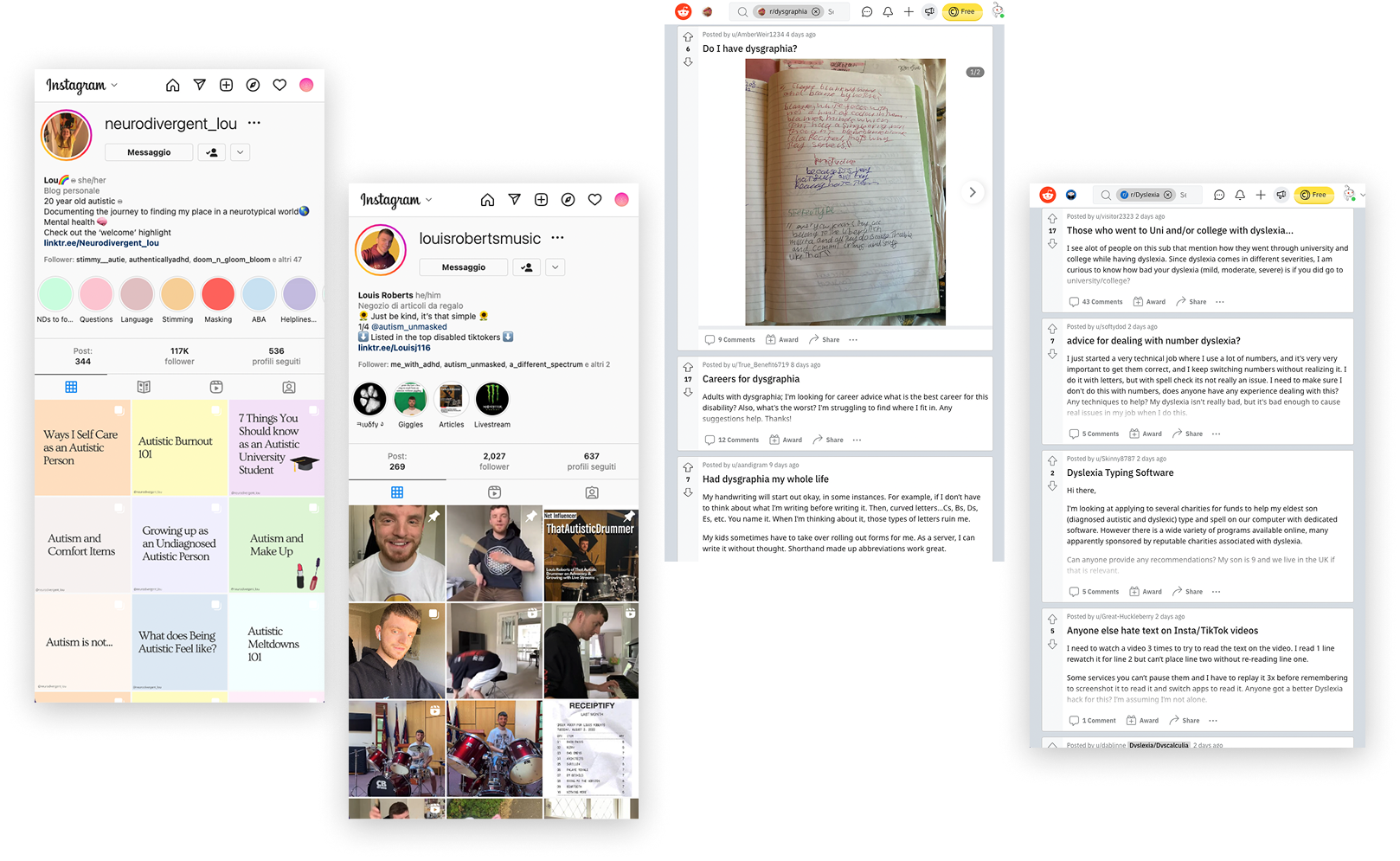
Digital Ethnography
We looked at various social media sites including Instagram, Reddit, blogs, and patient advocacy groups dedicated to people posting about their neurodiverse experiences.
Trend Analysis
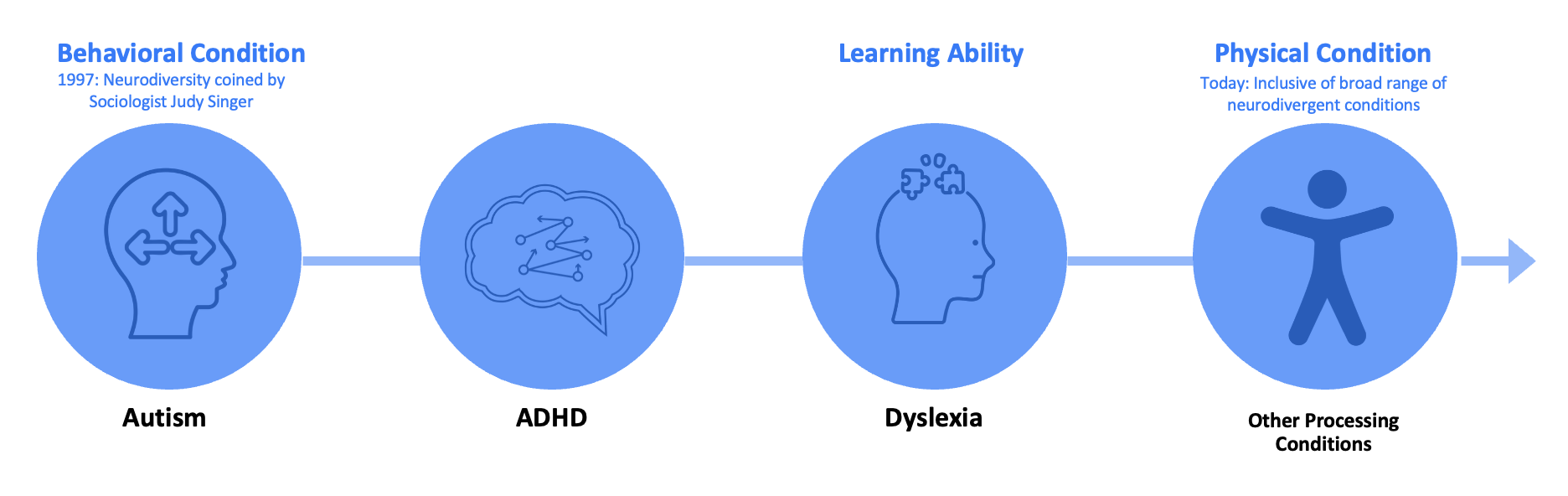
We also examined emerging trends in how neurodiversity is understood, from discussions that broadened it beyond autism and ADHD to encompass a wider range of cognitive processing differences.
Primary Research
In collaboration with oblo, I helped develop the structure for our qualitative and quantitative research. This included:
Expert Interviews
Hour long semi-structured calls with leading experts on a variety of neurodiversity issues.
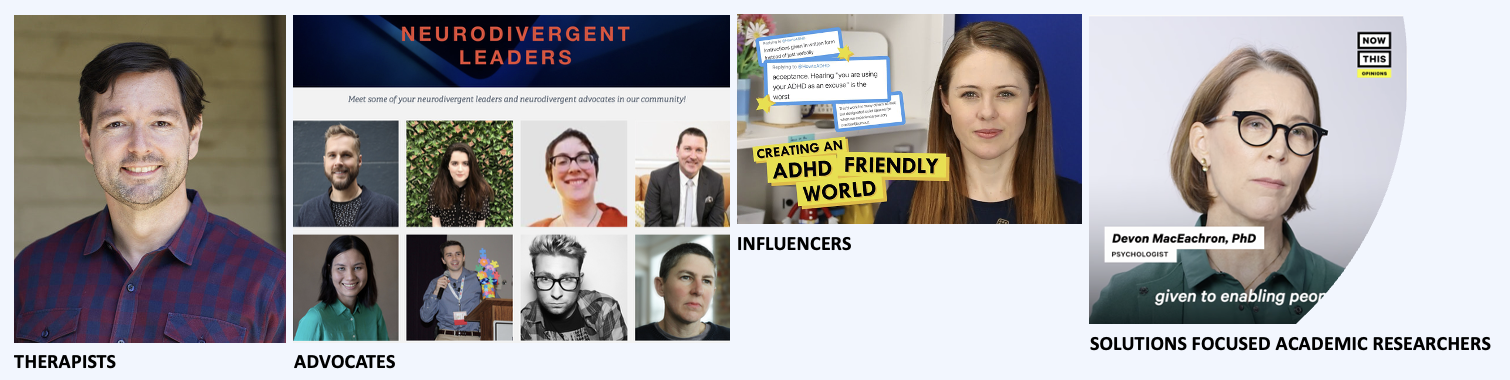
Profiles of various experts interviewed
User Interviews
Following those I crafted recruiting guides for neurodiverse participants across a range of profiles to put together our cohort for 1:1 user interviews.
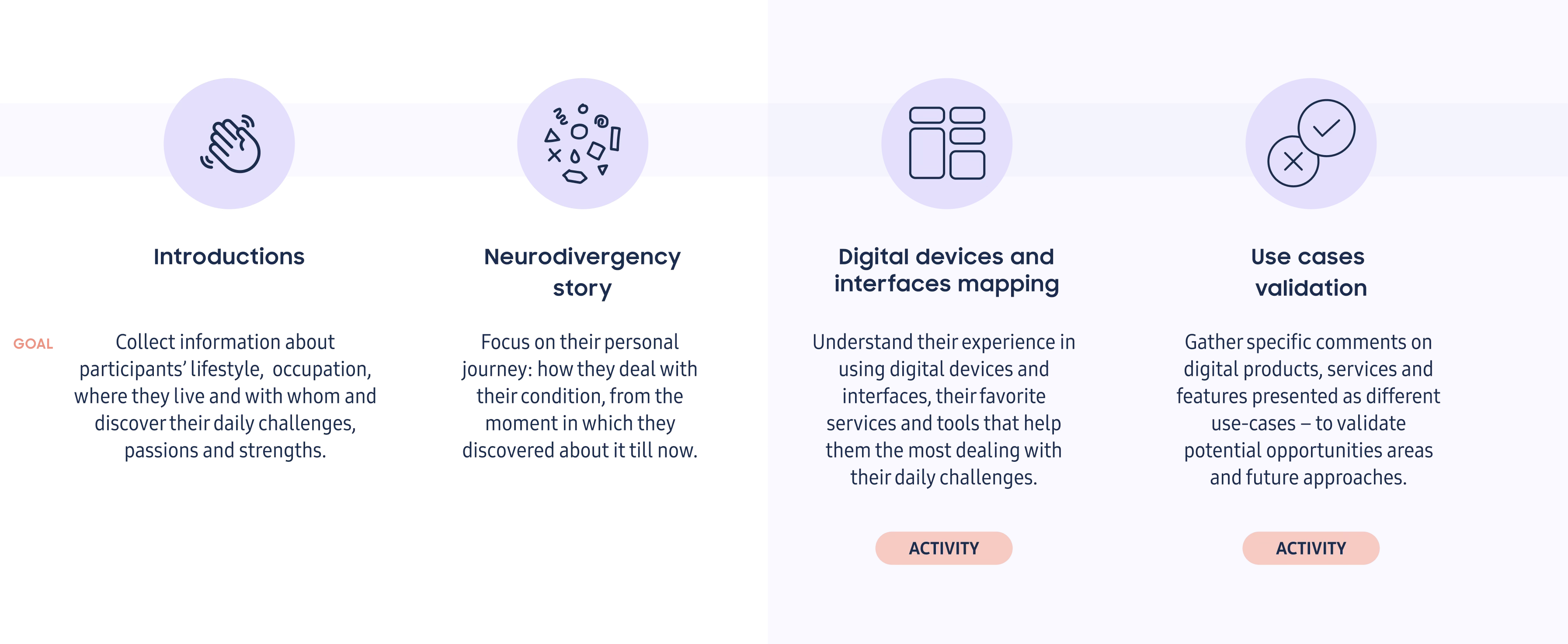
Structure of user interview and topics covered exploring users neurodiversity journeys and sensory, emotional, and cognitive challenges and preferences in devices
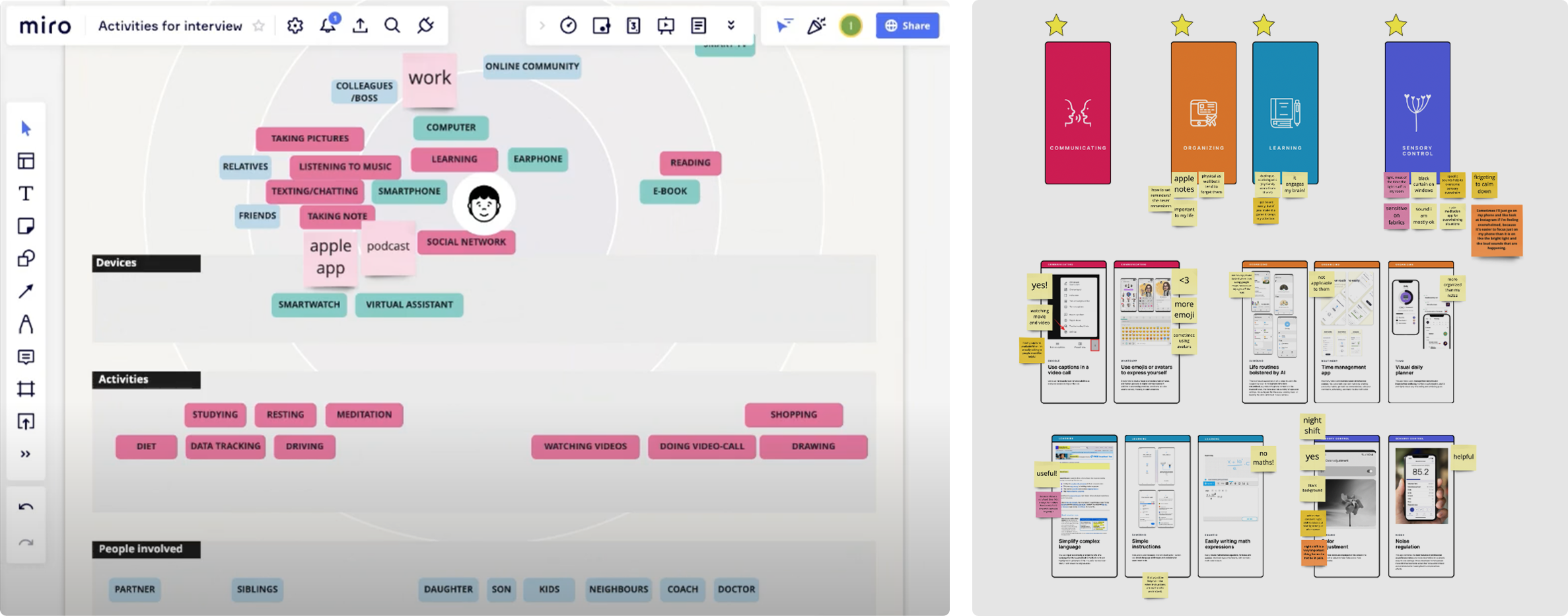
Select activities used to facilitate discussion, map out device usage, and contexts during user interviews
Quantitative Research
Survey Design
Based on initial insights from our qualitative research, we decided to develop a quantitative survey to dive deeper into the various profiles and validate insights within a larger population.
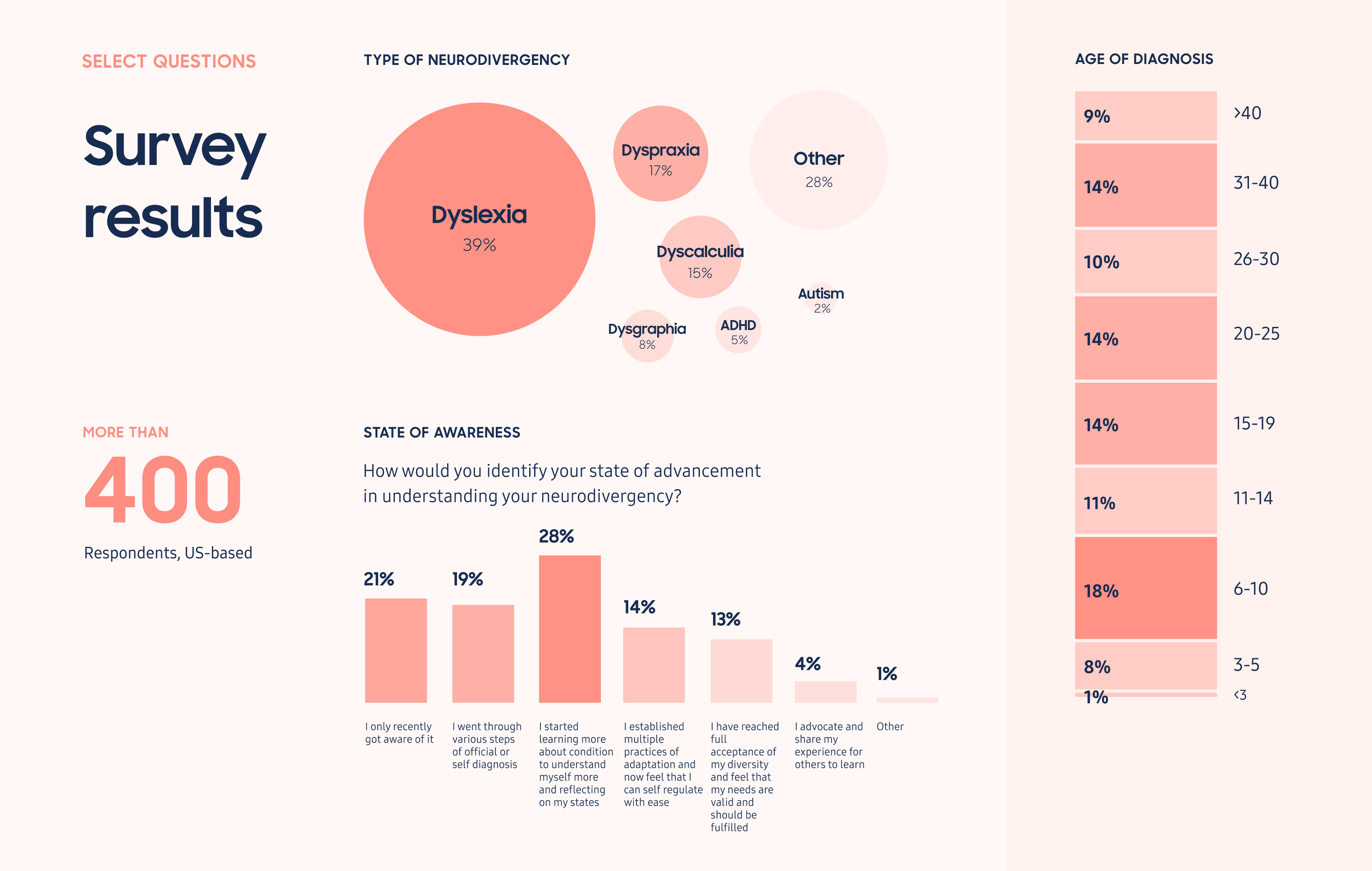
Synthesis
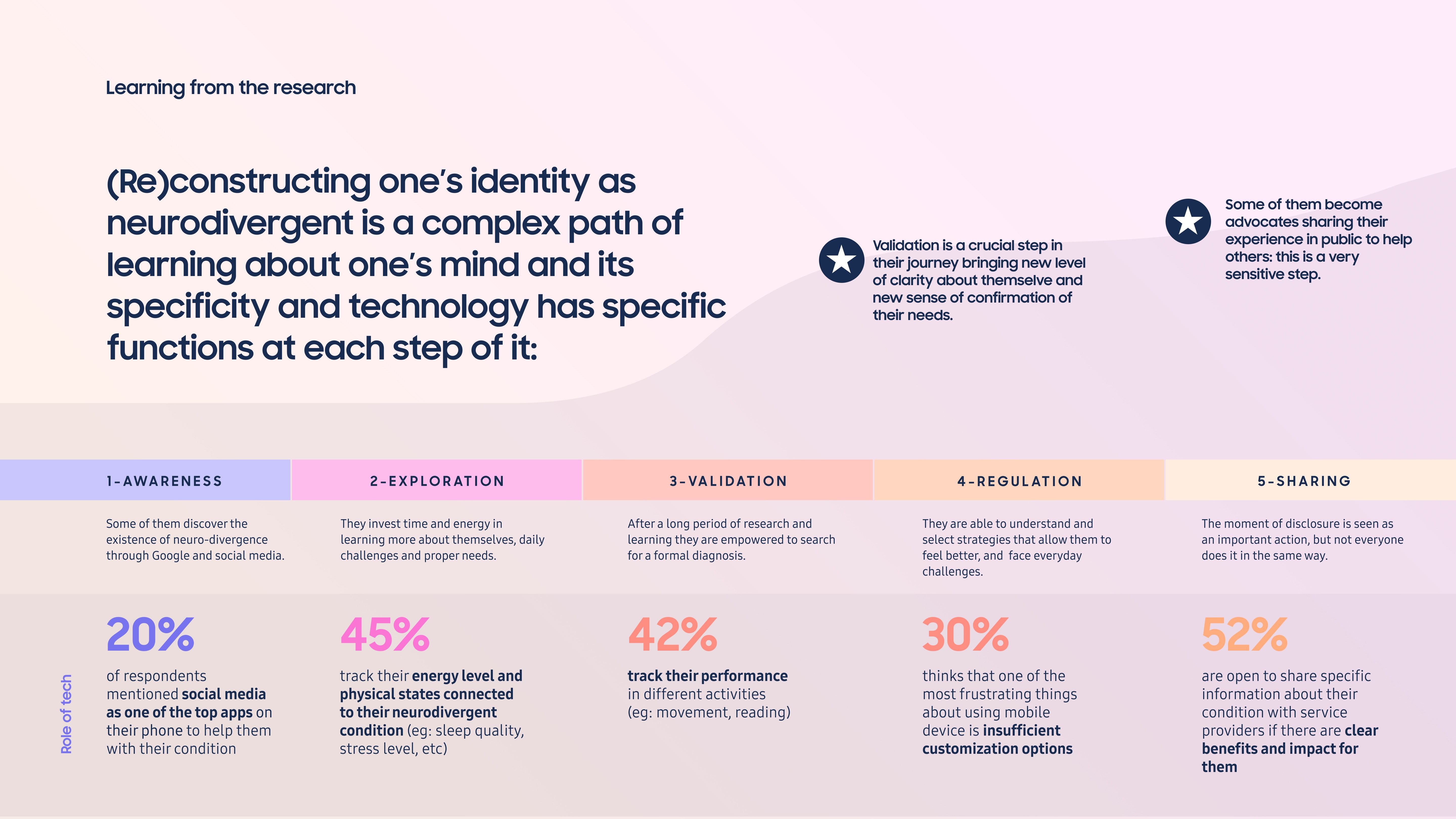
Journey mapping the qualitative themes along with quantitative data for insights around neurodivergency journeys
Framework Development
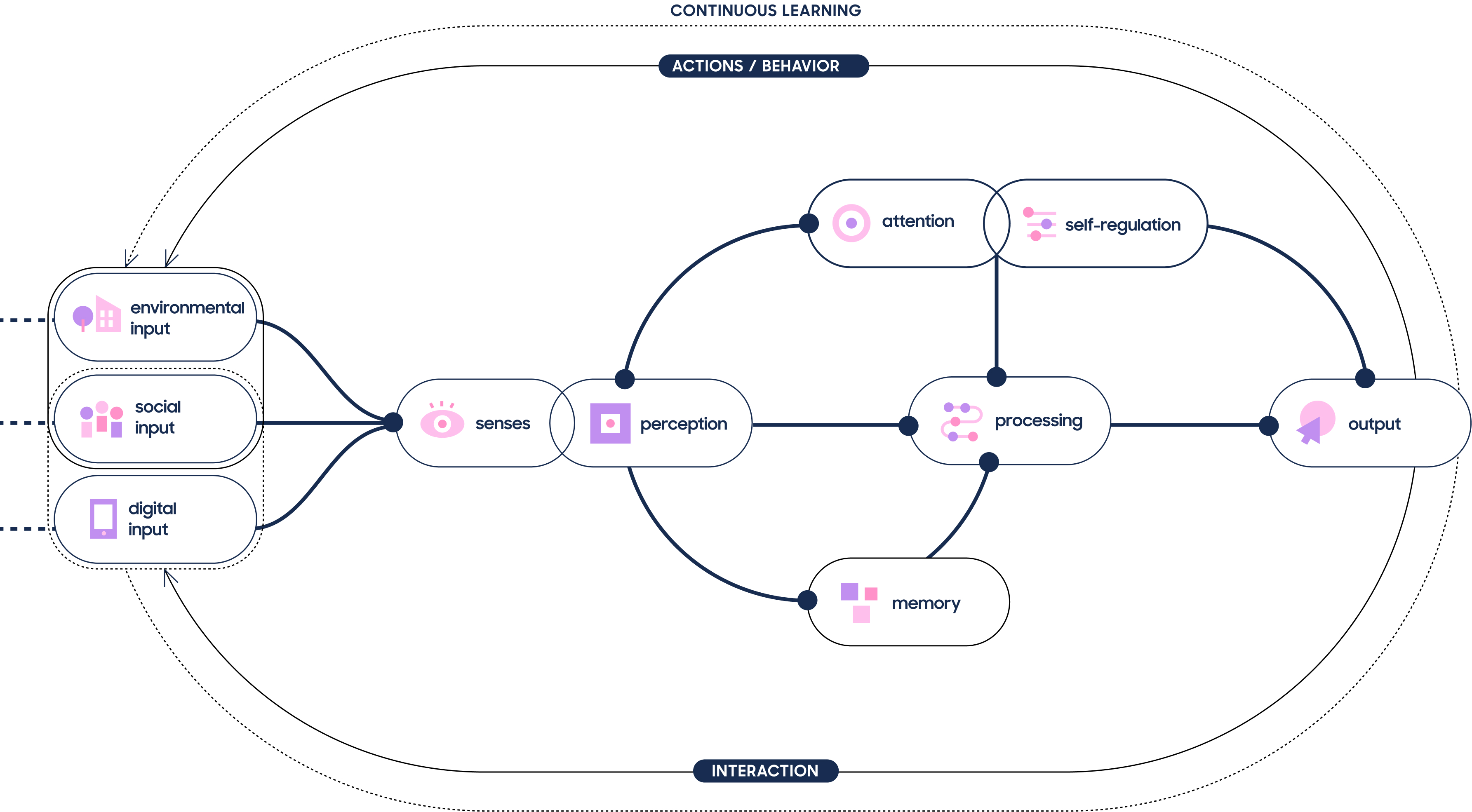
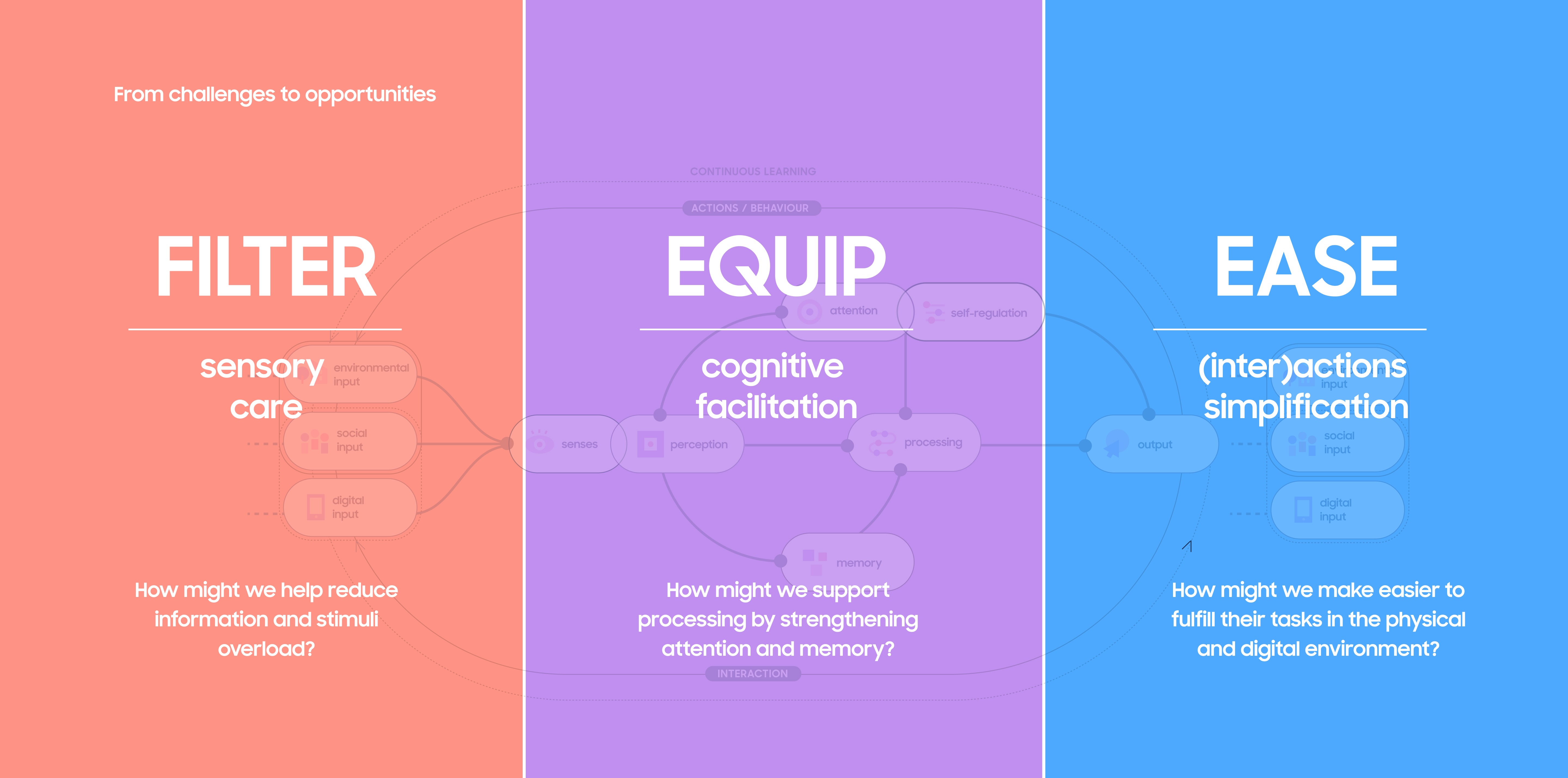
Based on the research findings, we developed interaction models that framed how users experience challenges on the cognitive processes, operative level, and through continuous learning; and existing strategies they had on flexibility, sensory control, and reducing cognitive friction. These early frameworks were intended to help provoke new design directions and product behaviors within Samsung’s ecosystem.
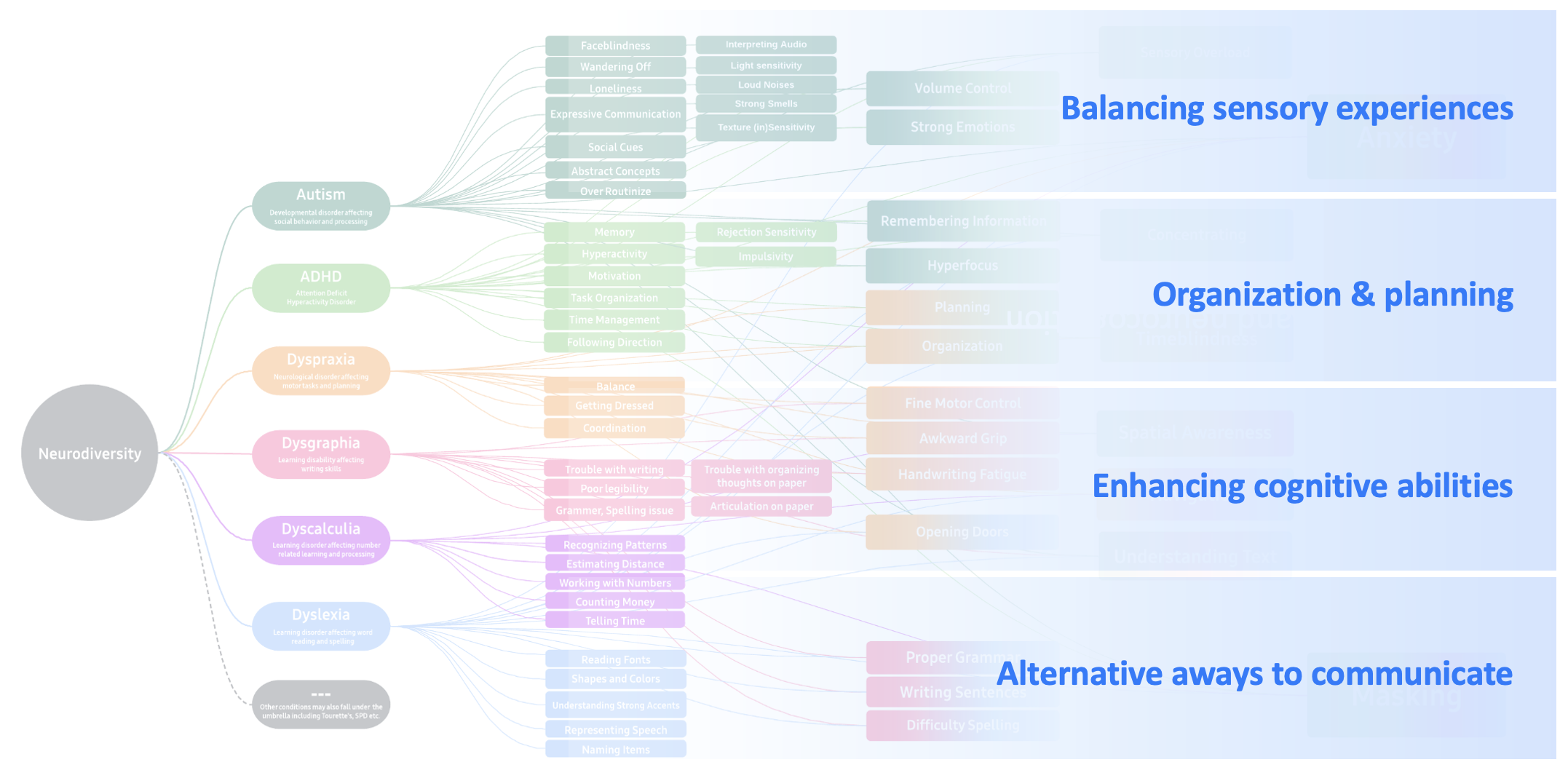
Needs Tree
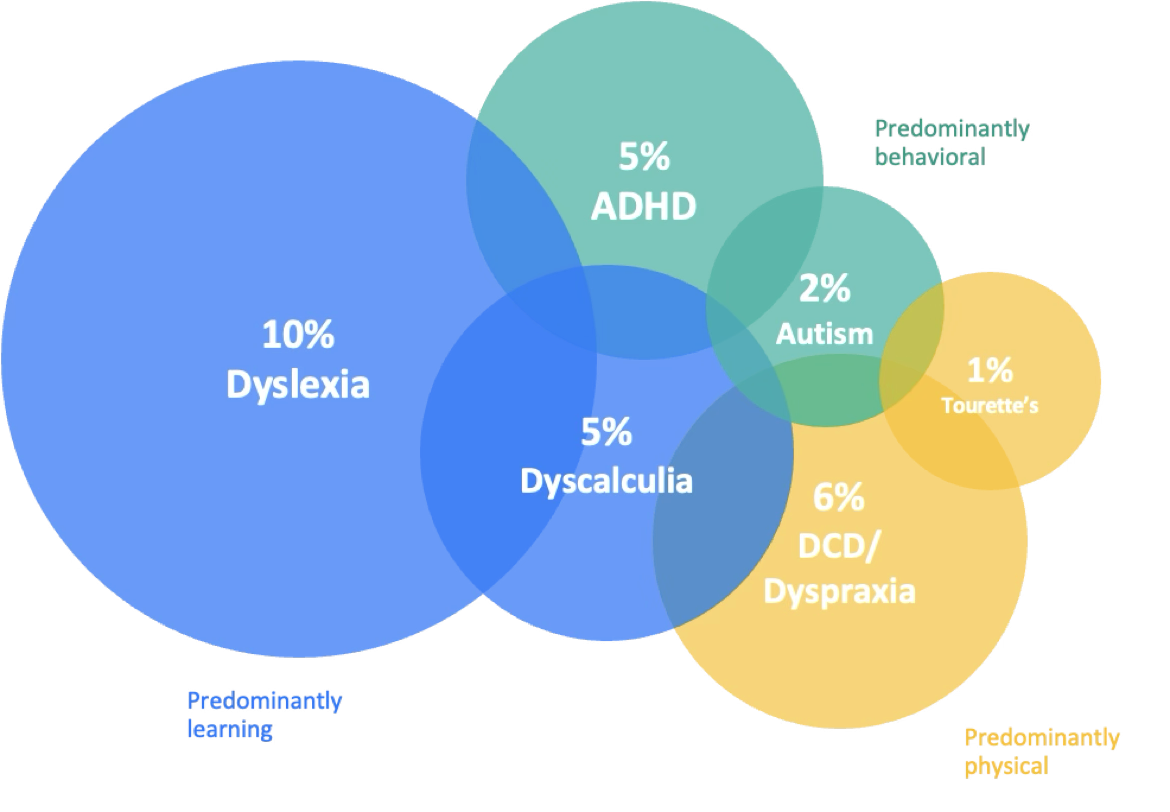
I led the synthesis of secondary research and early interview insights into a needs tree model. This tool organized user needs by neurodiversity profiles (e.g. autism, ADHD, dyspraxia etc.) and supported internal teams in understanding each profile better in detail and the ways challenges in them might intertwine.
Opportunity Mapping
We used the research and synthesized insights to identify both near- and long-term opportunity areas, ranging from easing current challenges to amplifying the unique strengths of neurodiverse users. This work also helped shape a strategic point of view on why these opportunities matter for Samsung’s future product development priorities. These areas were used to guide ideation in later workshop planning.
Workshop Design
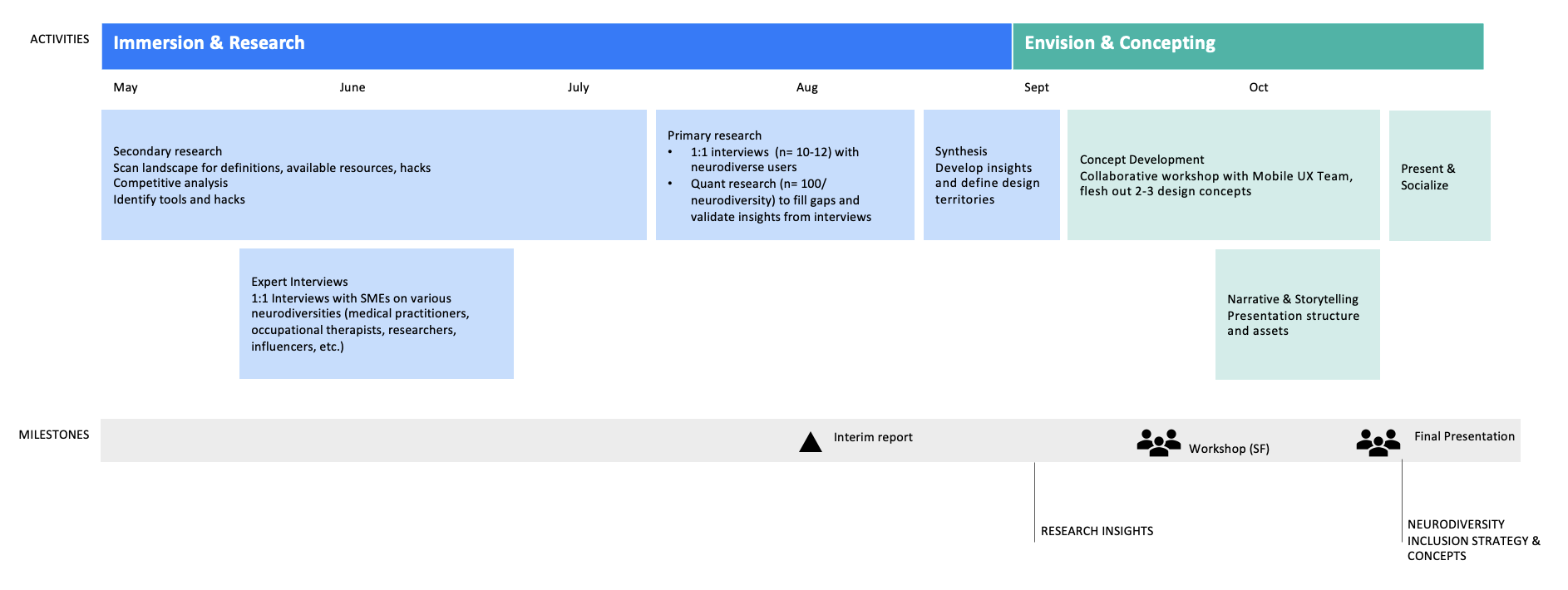
I supported the development of a design workshop for Samsung HQ in Korea, scheduled for the following October. I sourced, tested, and curated visual and physical stimulus materials, scenario provocations, and toolkits for collaborative ideation based on our synthesized insights.
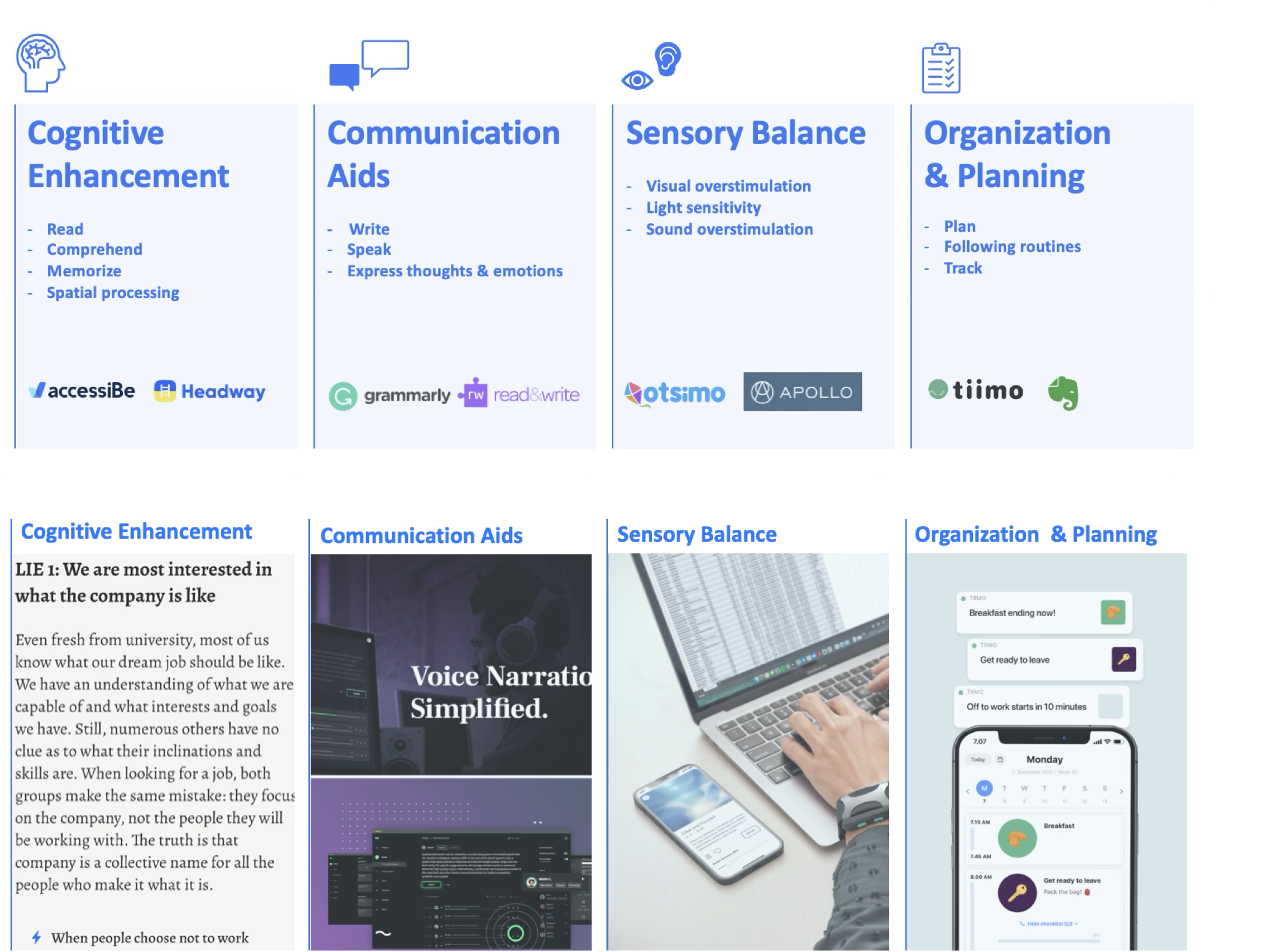
Examples of some tools that were sourced as stimulus materials across the different categories
In Closing
This project taught me how to work within ambiguity while setting a strong foundation for future concept development. Although we didn’t reach the concepting and prototyping phase during my time on the team, I gained experience aligning multiple levels of stakeholders, structuring mixed-methods research, and shaping early design strategy in a large corporate setting. It reinforced the value of thoughtful groundwork, especially when designing for underrepresented users and long-term impact.


.jpg)